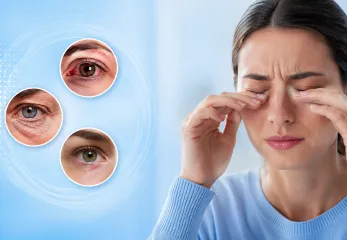


Allergy Season and Your Eyes: Why It’s Worse Than You Think
Eye allergies tend to feel more intense than nasal allergy symptoms because the eye’s surface is directly and continuously exposed to airborne allergens — but the good news is that ocular allergies respond very well to the right treatment once the mechanism behind them is understood. A combination of antihistamine eye drops, simple environmental habits, and avoiding the urge to rub actually resolves most seasonal eye discomfort quickly, and an optometrist can help pinpoint exactly what’s driving persistent symptoms if home care isn’t enough.
By Dr. Kalpana Rose, Optometrist — Reviewed September 2026, Wallaceton Eye Care, Kitchener
How Allergy Season Actually Affects Your Eyes
When airborne allergens such as pollen, dust, or pet dander come into contact with the conjunctiva — the thin, clear membrane covering the white of the eye and inner eyelids — the immune system responds by releasing histamine from mast cells. This triggers the classic ocular allergy response: dilated blood vessels, increased tear production, and itching.
The encouraging part is that this reaction, once understood, is highly manageable. Unlike some allergic responses, ocular allergy symptoms are localized and respond quickly to targeted treatment rather than requiring systemic management.
Why Eye Symptoms Often Feel More Intense Than Nasal Symptoms
There’s a good clinical reason eye allergies can feel disproportionately uncomfortable compared to sneezing or a stuffy nose:
- The ocular surface is directly and continuously exposed to airborne allergens with every blink, unlike nasal passages that filter some particles before they reach deeper tissue.
- Itching triggers a rubbing reflex, and rubbing mechanically releases even more histamine from mast cells in the eyelid tissue — creating a cycle that can intensify symptoms if not interrupted early.
- Contact lens wearers often notice symptoms sooner and more strongly, since allergens can adhere to the lens surface and stay in prolonged contact with the eye.
- Tear film changes during allergy season — often thinner or less stable — can make the eyes feel dry and irritated at the same time as watery, which understandably feels confusing but is a well-recognized pattern.
Recognizing why these symptoms happen is genuinely useful, because it directly informs what actually works to relieve them.
Common Ocular Allergy Symptoms Worth Recognizing
- Itching — the hallmark symptom of allergic conjunctivitis, distinct from the burning sensation more typical of dry eye
- Redness, from the dilation of conjunctival blood vessels
- Watery discharge, usually clear rather than thick or colored
- Mild eyelid swelling or puffiness, particularly noticeable in the morning
- A gritty or foreign-body sensation, especially in contact lens wearers
Recognizing this pattern helps distinguish seasonal allergies from other causes of eye irritation, which makes choosing the right relief far more straightforward.
What Actually Helps: Reliable, Evidence-Based Relief
The good news is that ocular allergy symptoms respond well to a fairly simple set of strategies:
- Antihistamine and mast-cell-stabilizing eye drops are highly effective and, for most people, provide noticeably fast relief by directly targeting the histamine response at its source.
- Cold compresses help reduce swelling and soothe itching in the moment, especially useful during flare-ups.
- Preservative-free artificial tears help dilute and flush allergens from the ocular surface and support a more stable tear film.
- Avoiding rubbing, even when the urge is strong, prevents the mechanical histamine release that intensifies symptoms.
- Switching to daily disposable contact lenses during allergy season reduces allergen buildup on the lens surface and often makes a noticeable difference for lens wearers.
- Simple environmental steps — keeping windows closed on high-pollen days, rinsing the face after being outdoors, and washing hands before touching the eyes — meaningfully reduce allergen exposure.
Most people find that a combination of these steps brings symptoms under control quickly, often within days of starting the right eye drop.
When It’s Worth Seeing an Optometrist During Allergy Season
Home care resolves the majority of seasonal eye allergy symptoms, and that’s genuinely the expected outcome for most people. It’s still worth booking an exam if:
- Symptoms persist despite over-the-counter antihistamine drops
- Discomfort is significant enough to interfere with contact lens wear
- There’s noticeable eyelid swelling, discharge that isn’t clear and watery, or pain rather than itching — signs worth ruling out for a secondary infection
- Symptoms return year after year and a longer-term management plan would help
An optometrist can confirm the cause, rule out anything that needs a different approach, and recommend prescription-strength options when needed — making each allergy season progressively easier to manage.
Book Now
Dealing With Itchy, Watery Eyes This Allergy Season?
Seasonal eye allergies are highly treatable once the right approach is in place. An eye exam can confirm what’s driving your symptoms and get you on a relief plan that actually works
Book an eye exam →  Call us at 1 (519) 893-0100
FAQ
Frequently Asked Questions
Why do my eyes feel worse than my nose during allergy season?
The ocular surface is directly and continuously exposed to airborne allergens, and rubbing the eyes releases additional histamine, which can make eye symptoms feel more intense than nasal symptoms. The encouraging part is that eye allergies respond very well to targeted treatment.
What's the fastest way to relieve itchy eyes from allergies?
Antihistamine or mast-cell-stabilizing eye drops typically provide the fastest, most reliable relief by directly addressing the histamine response. Cold compresses and avoiding rubbing help manage symptoms in the moment as well.
Can I wear contact lenses during allergy season?
Yes, in most cases, though switching to daily disposable lenses during allergy season is often recommended, since it reduces allergen buildup on the lens surface and tends to make symptoms noticeably more manageable
How do I know if it's allergies or dry eye?
Itching is the hallmark of an allergic response, while dry eye more typically presents as a burning or gritty sensation without significant itching. Since the two can overlap, an eye exam is the most reliable way to confirm the cause
Are eye allergy symptoms the same every year?
Not necessarily — symptom severity can vary with pollen counts, environmental changes, and how consistently preventive steps are followed. Many people find that establishing a treatment routine each season makes symptoms progressively easier to manage over time.
Contact us
Wallaceton Eye Care
Wallaceton Eye Care 1950 Fischer-Hallman Road, Unit 307, Kitchener, ON N2R 0V1

Mon–Fri 10am–6pm · Sat 11am–6pm · Sun Closed