

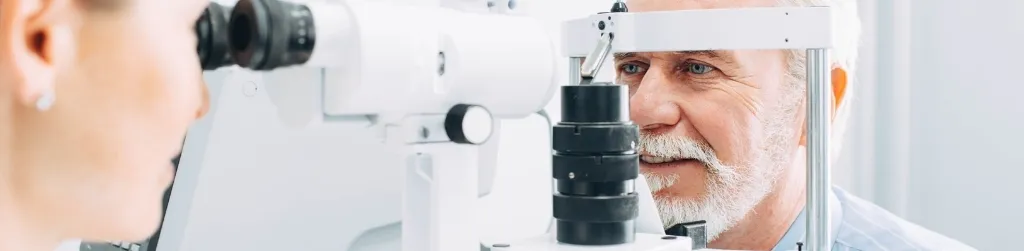
What Happens During a Comprehensive Eye Exam in Kitchener? Glaucoma Testing, Retinal Imaging & More Explained
Booking an eye exam often brings up one simple question: what actually happens once you’re in the chair? A comprehensive exam covers far more than reading letters off a wall chart. Depending on your age, medical history, and visual needs, it may includes a vision assessment, prescription testing, eye pressure measurement , retinal imaging, and a thorough evaluation of overall eye health.It all designed to detect issues years before they affect your vision.
Whether you’re booking for yourself, your child, or another family member, here’s what you can expect during a comprehensive eye exam.
By Dr. Kalpana Rose, Optometrist — Reviewed August 2026 Wallaceton Eye Care, Kitchener
Why a “Full/Comprehensive” Eye Exam Covers More Than Just Vision?
A vision check tells you how clearly you see, A comprehensive eye exam evaluates why you see the way you do and whether the eyes themselves are healthy. Many eye diseases — including glaucoma, diabetic eye disease, and some retinal conditions — often develop without noticeable symptoms in their earliest stages. That’s why catching them early, when they’re most treatable, is the entire point of testing beyond the standard vision test
Reviewing Your Medical and Vision History
Every comprehensive exam begins with a conversation about your health. Optometrist will ask about:
- Any recent changes in your vision
- Headaches, eye strain, flashes, floaters, or dry eyes
- Current glasses or contact lenses
- Medical conditions such as diabetes or high blood pressure
- Medications that may affect vision
- Family history of glaucoma, macular degeneration, retinal disease, or other eye conditions
These details help determine which tests are most appropriate and identify any factors that may increase your risk of eye disease.
Vision Testing and Prescription Assessment
One of the most familiar parts of the exam is measuring how clearly you see at distance and near.
If you wear glasses or contact lenses—or think you may need them—your optometrist performs a refraction, comparing different lenses to determine the prescription that provides your clearest, most comfortable vision.
This part of the exam also evaluates:
- Distance vision
- Near vision
- Astigmatism
- Eye coordination
- Focusing ability
- Depth perception (when appropriate)
Even small prescription changes can reduce headaches, eye strain, and fatigue during reading or computer work.
Glaucoma Testing and the Eye Pressure Check
Glaucoma is one of the leading causes of permanent vision loss worldwide because it often develops silently. One important screening tool is measuring intraocular pressure (IOP)— the fluid pressure inside the eye. Depending on the equipment used, this may involve a gentle puff of air or a light-touch instrument. Both methods are quick, safe, and generally painless. Elevated pressure doesn’t always mean glaucoma is present, but it’s one of the clearest early warning signs, which is why it’s checked at nearly every comprehensive exam rather than only when symptoms appear.
However, eye pressure is only one piece of the puzzle. Your optometrist also evaluates the optic nerve, measures the thickness and appearance of its tissues, and considers your family history and other risk factors before determining whether further testing is needed.
Quick answer: Glaucoma testing usually combines an eye pressure measurement with an optic nerve assessment, and takes only a few minutes as part of a standard eye exam.
Retinal Imaging: A Closer Look at the Back of the Eye
Retinal imaging uses a specialized digital camera to capture a detailed picture of the retina, blood vessels, and optic nerve at the back of the eye. It gives the optometrist a much clearer view than a standard light-based exam alone, and creates a baseline image that future visits can be compared against — making subtle year-over-year changes far easier to catch. These high-resolution images help detect and monitor conditions such as diabetic retinopathy, macular degeneration, changes to the optic nerve associated with glaucoma, high blood pressure related changes, and retinal detachment risk.
Pediatric Eye Exams: What’s Different for Kids
Children’s eye exams cover the same core areas — vision, eye alignment, and overall eye health — but are adapted for shorter attention spans and use age-appropriate tools rather than relying on reading letters. Since a child’s eyes are still developing, detecting issues like lazy eye (amblyopia), strabismus (eye misalignment), or significant refractive errors early makes treatment significantly more effective.
A general guide: children should generally have their first comprehensive eye exam around 6-12 months of age one, another before starting school, and then routine eye checkups every one to two years, or as recommended by the optometrist.
Family Optometry: One Clinic, Every Age Group
A family optometrist provides eye care across every life stage under one practice — pediatric screening for the kids, routine vision correction for working-age adults, and glaucoma and retinal monitoring as risk increases with age. Beyond convenience, this continuity means your optometrist builds a full picture of your family’s eye health history over time, which can make it easier to spot patterns, like a family tendency toward myopia or glaucoma, and act on them earlier.
Signs It’s Time to Book an Eye Exam
Even if your vision seems good, routine eye exams remain important. A few common signs suggest it’s worth scheduling sooner rather than waiting for a routine checkup:
- Squinting or noticeable difficulty with distance or close-up vision
- Frequent headaches, especially after reading or screen use
- Family history of glaucoma, diabetes, or macular degeneration
- It’s been more than a year (for children) or two years (for most adults) since the last exam
- Blurred vision, halos around lights, or eye pain
Finding an Eye Doctor Near You in Kitchener
If you’re looking for an eye doctor in Kitchener, consider a clinic that offers comprehensive eye exams, glaucoma screening, retinal imaging, children’s eye exams, contact lens fittings, and ongoing management of eye diseases.
Having these services available in one location makes follow-up care more convenient and helps build a complete picture of your eye health over time.
Book Now
Ready for Your Comprehensive Eye Exam in Kitchener?
Whether you need an updated prescription, glaucoma testing, retinal imaging, or a children’s eye exam,
our team provides comprehensive eye care for every stage of life.
Book an eye exam →  Call us at 1 (519) 893-0100
FAQ
Frequently Asked Questions
How often should I get a comprehensive eye exam?
For most healthy adults, every one to two years is recommended. Children, seniors, people with diabetes, and those at higher risk of eye disease may need more frequent examinations based on their optometrist’s recommendations.
How often should I get a glaucoma test?
Most adults should have eye pressure checked during every comprehensive eye exam, typically every 1–2 years. Those with a family history of glaucoma, elevated eye pressure, or over age 40 may be advised to monitor more frequently..
Is an eye pressure test painful?
No. Most modern methods with a gentle puff of air or a light-touch instrument, and the test itself takes only a few seconds and generally painless.
At what age should a child have their first eye exam?
Optometrists commonly recommend a first comprehensive exam between 6-12 months of age, and another before starting school and routine exams every 1–2 years unless advised otherwise..
What does retinal imaging show that a regular exam doesn't?
It Retinal imaging provides a detailed, magnified image of the retina and optic nerve, making it easier to detect and track subtle changes — such as early diabetic retinopathy or macular changes — that might not be visible otherwise.
Do I need a referral to book a comprehensive eye exam?
No. In most cases,you can schedule a comprehensive eye exams directly with your local optometrist without a referral.
Contact us
Wallaceton Eye Care
Wallaceton Eye Care 1950 Fischer-Hallman Road, Unit 307, Kitchener, ON N2R 0V1

Mon–Fri 10am–6pm · Sat 11am–6pm · Sun Closed